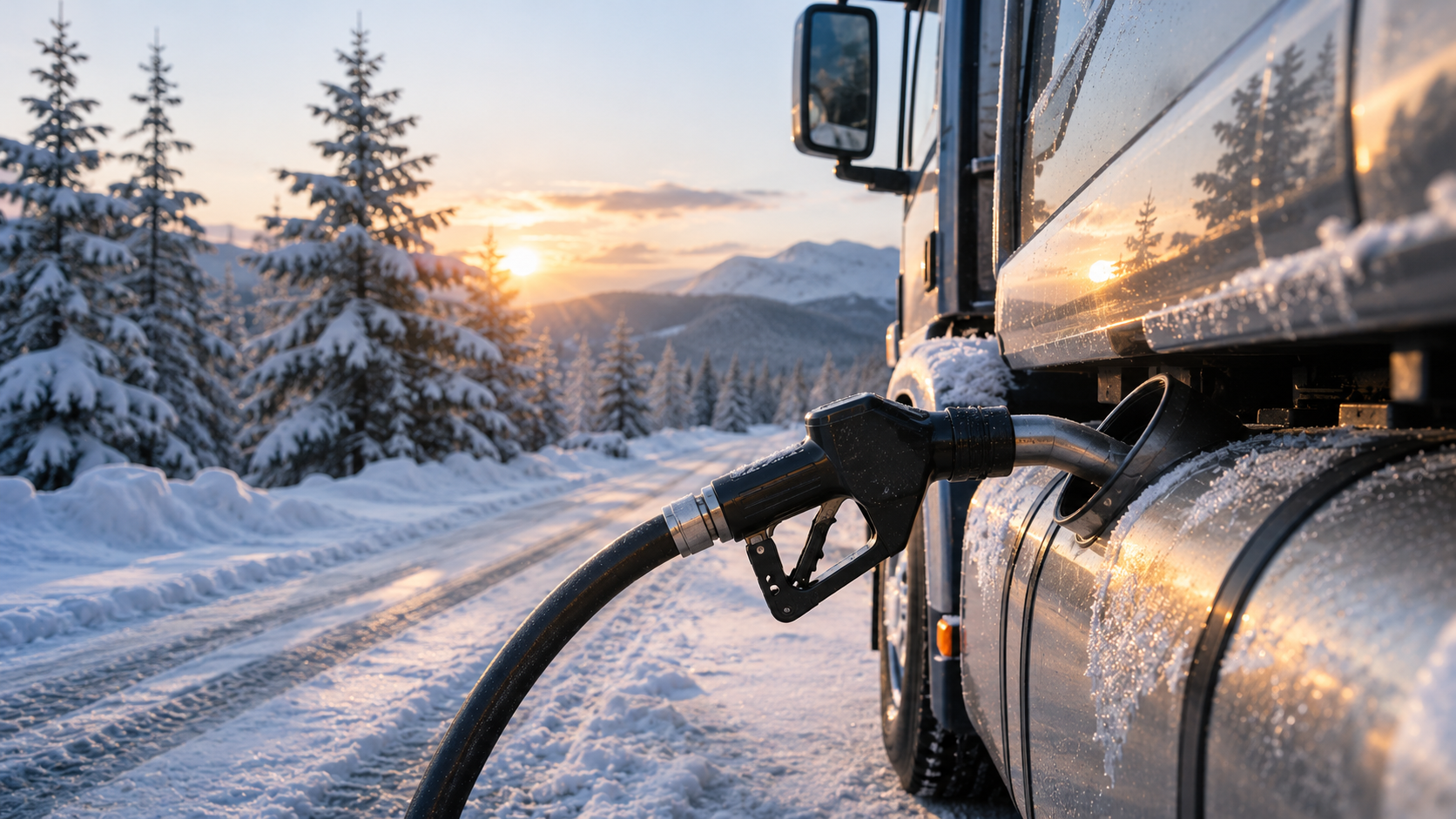
Every winter, the same situation repeats itself: at -15°C in the morning, a truck refuses to start, and a thick paraffin deposit is found in the fuel filter. The cause is almost always the same — summer diesel or fuel that is not suitable for the prevailing temperatures.
Why diesel fuel “freezes”
Diesel fuel contains paraffins. At low temperatures, they crystallize, causing the fuel to become cloudy, thicken, and clog filters. The key indicator here is the Cold Filter Plugging Point (CFPP) — the lowest temperature at which fuel can still pass through a filter.
Diesel fuel grades according to EN 590 (DSTU 7688)
5 rules for operating diesel vehicles and equipment in winter
1. Switch to winter fuel in advance, before the first sustained frosts, rather than waiting for equipment to stop working.
2. Do not mix summer and winter diesel in unpredictable proportions — the resulting fuel properties may be unreliable.
3. Keep tanks and storage containers full. Less air means less condensation and water in the fuel.
4. Replace fuel filters before the winter season and regularly drain sediment from the separator.
5. Avoid improvised solutions, such as adding gasoline or kerosene. They reduce the fuel’s lubricating properties and can damage fuel injection systems.
The most important thing is fuel quality from the start
The best way to prevent winter fuel problems is to use fuel that meets the required specifications from the outset. UNTK supplies diesel fuel compliant with European quality standards and EU requirements, with a quality certificate for every batch. Delivery across Ukraine by our own fuel tankers takes 1–3 days. Contact our managers to check the availability of winter diesel and current wholesale prices.