How digital transformation led by a business process automation specialist helped UNTK reduce order processing time from ten minutes to one, virtually eliminate documentation errors, and increase sales 2.5-fold without a proportional increase in headcount.
As a business grows, its internal processes must keep pace with increasing workloads. For a fuel company, this means processing orders quickly, coordinating shipments, communicating with suppliers, and maintaining accurate documentation. When all these operations depend on phone calls, emails, and Excel spreadsheets, manual processes eventually become a bottleneck to further growth.
This was precisely the challenge UNTK faced. The solution came through a comprehensive digital transformation initiative, with Artur Slobozhaninov playing a key role as the person responsible for digital transformation and business process automation at UNTK.
Over the years, Artur has played a key role in developing the company's digital solutions, focusing on sales automation, order management, and the optimization of operational processes.His approach goes beyond simply transferring individual tasks into digital formats. It focuses on fundamentally changing how departments and participants in business processes interact.
"We didn't decide to go digital just because it was a buzzword. Our tools simply couldn't keep up with the pace of our growth," says Artur Slobozhaninov.
From Manual Processing to a Unified Digital System
Before the digital platform was introduced, order information at UNTK was scattered across multiple communication channels, including phone calls, messaging apps, emails, and Excel spreadsheets.
A manager would receive an order, manually enter the information into a spreadsheet, call the supplier to confirm the details, and prepare the required documents separately. Each subsequent stage required additional actions and coordination between employees.
As order volumes increased, this model created an increasingly heavy operational workload. The company faced two options: expand the team to handle the growing volume of requests or redesign the underlying processes.
Artur Slobozhaninov focused his digital transformation efforts on eliminating these operational bottlenecks. One of the first processes to be digitized was the handling of shipment requests. This is a critical stage in a fuel company's operations: the accuracy and speed of processing a request directly affect the organization of the subsequent delivery.
The objective was to create a system in which information could move through all the necessary stages electronically, without constant manual data entry or the need for employees to repeatedly transfer information between one another.
Ten Minutes Down to One: Measurable Results of Digital Transformation
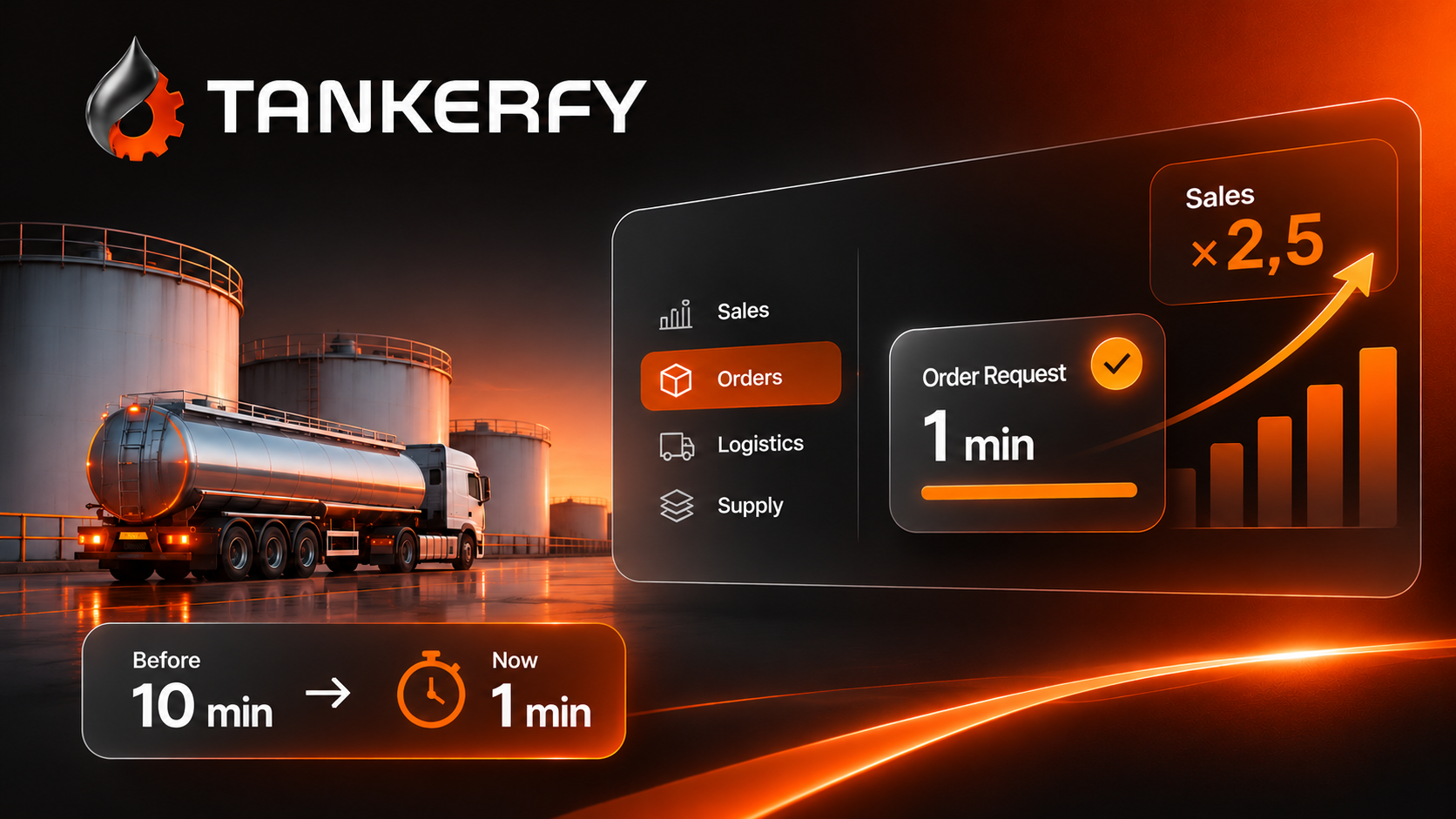
Following the implementation of the digital process, the time required to process an individual request decreased from approximately ten minutes to just one.
In practical terms, processing became seven to ten times faster. This enabled the company to handle significantly higher order volumes without a proportional increase in its operational workforce.
Another important outcome was the improvement in documentation accuracy.
"This was the main problem we managed to solve," says Slobozhaninov. "The likelihood of human error in documents and requests has dropped to virtually zero."
Reducing manual operations helped minimize risks associated with duplicate data entry, inaccuracies in requests, and information being transferred across different communication channels.
At UNTK, the effectiveness of digital transformation is measured not only by the speed of individual tasks but also by overall business performance. Following the system's implementation, the company's sales increased 2.5-fold. This result was achieved without a proportional increase in headcount or changes to the company's organizational structure.
This is one of the key outcomes of Artur Slobozhaninov's work on automation: the digital system enabled the company to scale its operations without creating a corresponding increase in administrative workload.
From Automating Individual Tasks to Integrated Business Management
For Artur Slobozhaninov, digital transformation is not limited to implementing individual software tools. An important part of his work involves building an interconnected system in which sales, orders, documentation, and logistics function as components of one continuous process.
This approach requires an understanding not only of technology but also of the business itself: how orders are created, who participates in processing them, where delays occur, and which operations can be automated.
That is why the development of digital solutions at UNTK places particular emphasis on the practical application of technology. Software must address specific operational challenges, and its effectiveness must be measured by the results it delivers for the company.
This principle has become the foundation for the further development of the digital products Artur is working on.
From UNTK's Experience to the Development of Proprietary Technology Solutions
The expertise accumulated in automating fuel trading and logistics has provided the foundation for developing specialized digital platforms, including FlowCore and Tankerfy.
Tankerfy is a cloud-based SaaS platform designed for companies involved in trading and transporting fuel, chemicals, and other liquid bulk commodities.
The platform is built around the integration of key business processes within a single digital environment, including sales management, order processing, logistics, and supply chain management.
For Artur Slobozhaninov, Tankerfy represents a continuation of his practical work in digitalizing the fuel sector. While UNTK's digital solutions were initially developed to address the company's internal operational needs, Tankerfy is being built as a specialized product that can serve a broader range of market participants.
Another area of the platform's development involves the use of artificial intelligence for demand forecasting and delivery route optimization. These capabilities open up opportunities to move beyond automating routine operations toward more comprehensive management of resources and logistics processes.
Digital Transformation Measured by Results
UNTK's experience demonstrates that effective digital transformation begins with understanding the specific challenges a business faces. In this case, order processing had become an operational bottleneck as business volumes increased.
Artur Slobozhaninov's work on automating this process helped reduce request processing time by approximately tenfold, virtually eliminate documentation errors, and create the conditions for a 2.5-fold increase in sales without a proportional expansion of the workforce.
Today, this experience continues to evolve through new technology projects, including Tankerfy, which is designed to address the needs of the international market for liquid bulk trading and logistics.
For UNTK, digitalization has become more than a standalone IT project — it is an integral part of its business model. For Artur Slobozhaninov, it represents a professional commitment spanning many years, focused on developing technological solutions that help companies operate faster, more accurately, and more efficiently.